
Input
Interviews, without the meeting.
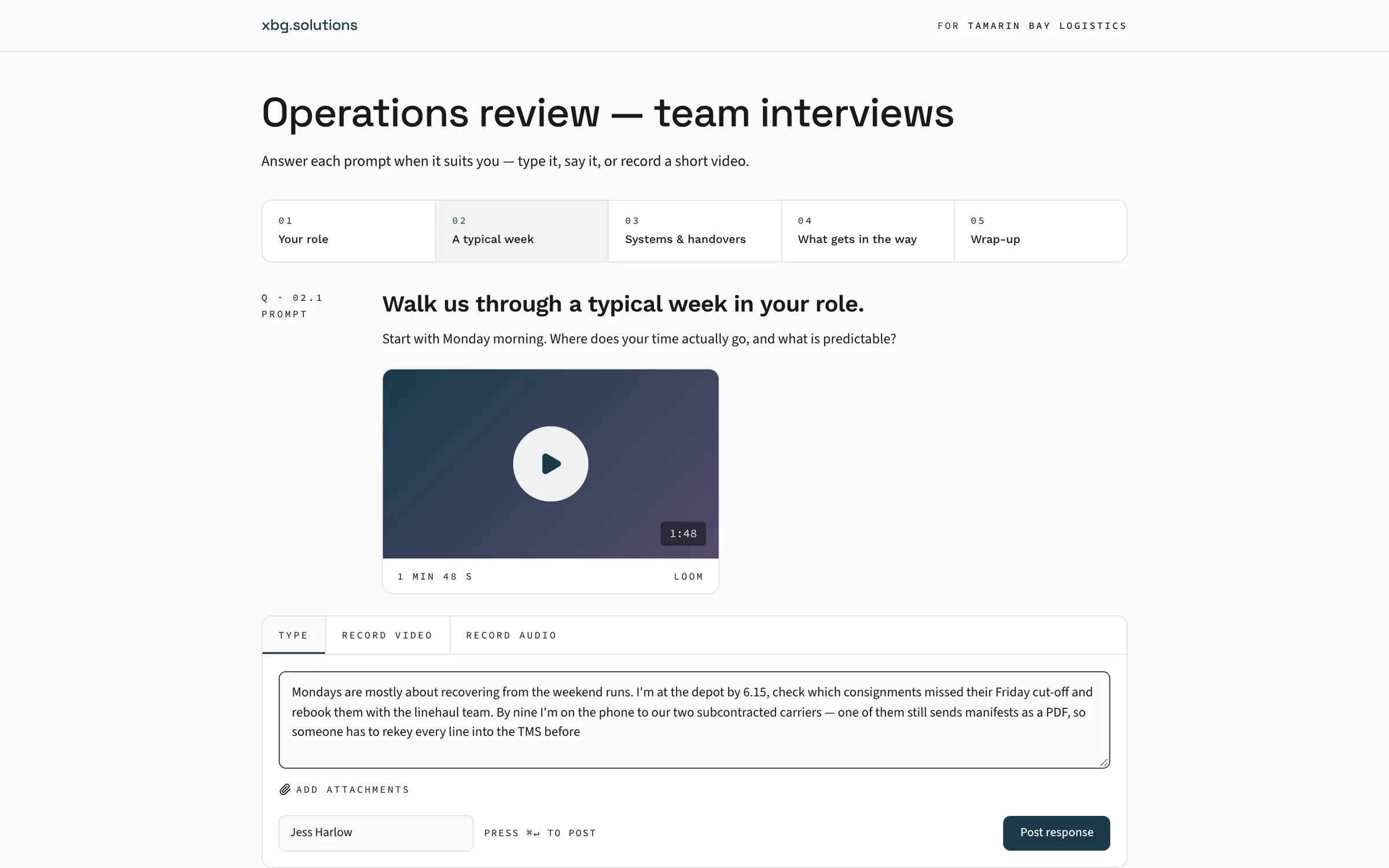
Ten stakeholder interviews means ten meetings to schedule, and ten people answering on the spot, in a format they didn't choose. Input turns the interview into a questionnaire they answer in their own time: typed, spoken, or on video.
We use it to gather input at the start of our engagements, so everyone answers the same questions, and we hear it in their own words.
How it works
Write the questions
Set out the questionnaire in sections, then share it as a link. Each share is a snapshot, so editing the questionnaire later never changes what someone is already answering. Choose when it opens and when it closes.
They answer
Respondents open the link, with no account to create, and answer each question in whichever way suits them. You can follow up in a thread under any answer, and they can reply.
You read it back
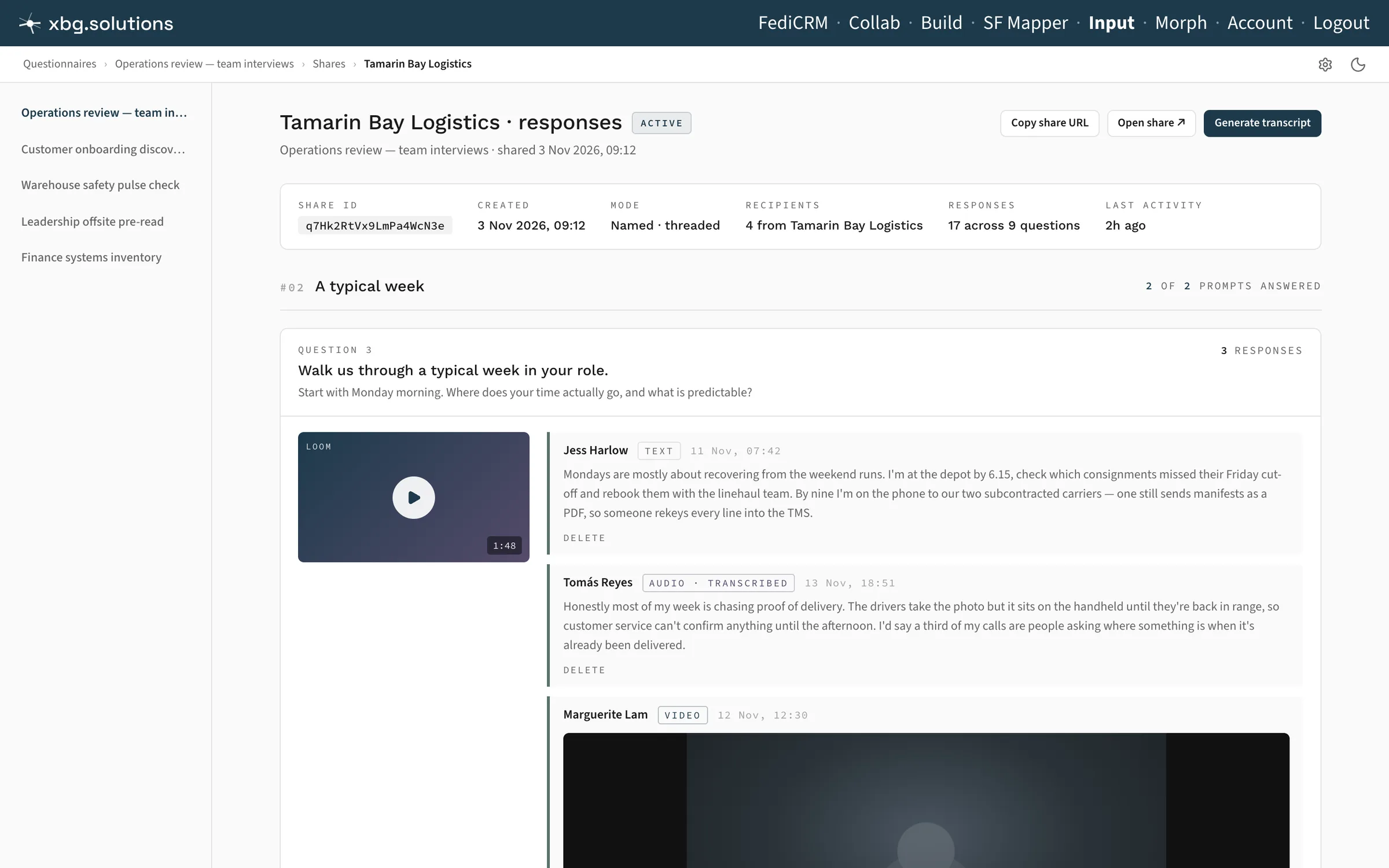
Every answer sits under the question it belongs to. When you want it, transcribe the share into one document, set out section by section and question by question.
When it suits them
Nobody has to find a time that works for everyone. People answer between meetings, after hours, or over a few sittings, and they get time to think before they answer.
How it suits them
Some people think best in writing, and some think out loud. Each respondent chooses: type an answer, speak it and have it written down as they go, or record it on video.
The same questions, every time
A standard questionnaire means every stakeholder answers the same questions in the same order, so their answers can be compared side by side, and nobody's view depends on how the conversation happened to go.
Recordings aren't deleted on a timer. They're input to the engagement, and they're kept for as long as it needs them.
Transcription, when you ask for it
Transcription is optional, and it never runs on its own. You choose when to transcribe a share, and nothing is sent anywhere until you do.
We use OpenAI's Whisper, which processes audio outside Australia. So transcription stays switched off until you explicitly allow offshore processing, and your respondents' recordings stay where they are until then.
Their words, under your key
Answers, recordings, attachments, and transcripts are encrypted under your account's key. A recording is sealed as soon as it's uploaded, and nobody can fetch it from a link.
We design Input, and the platform under it, for SOC 2 and GDPR readiness.
Run your own
Input is software, not a subscription. You can buy the code as it is, with a licence to use it, and install it in your own environment. Setup, support, and updates aren't included.
Often goes with
Hearing from the people involved, before anyone decides what to build, is where Product Strategy starts.
Ready for a conversation?
No sales pitch. No obligation. Just a chat about what you're building and where the opportunities might be.